
MSMEs vs Global Giants, How AI Lets You Compete Head On
February 20, 2026
Stay Profitable in Chaos: MSME Survival Plan for the Gulf Crisis
March 17, 2026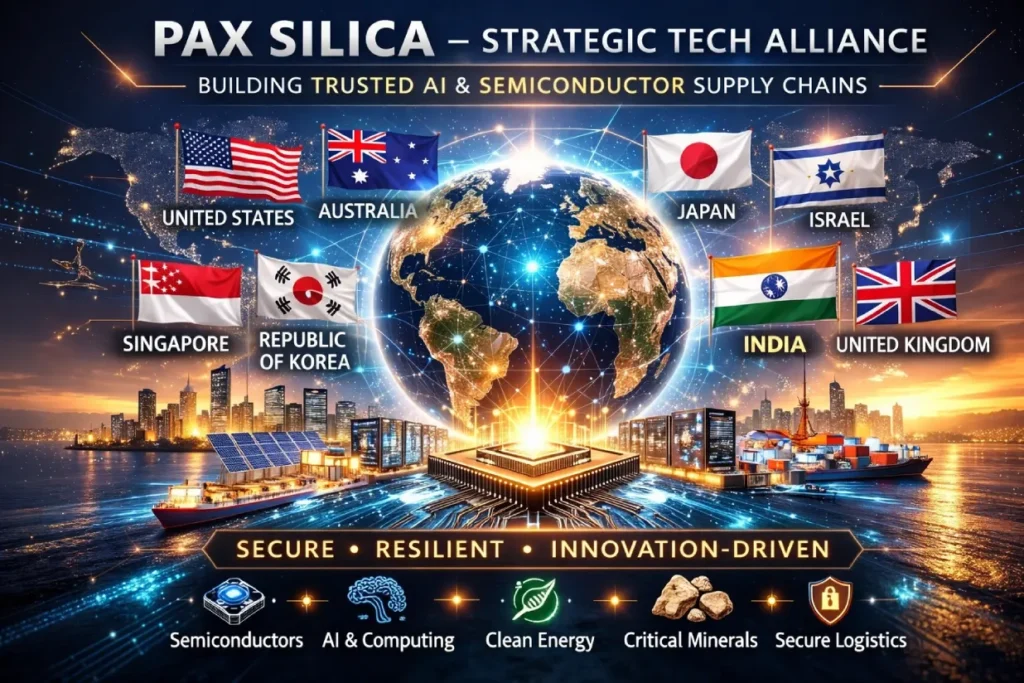
Pax Silica Explained: How India’s New Alliance Changes the AI Game
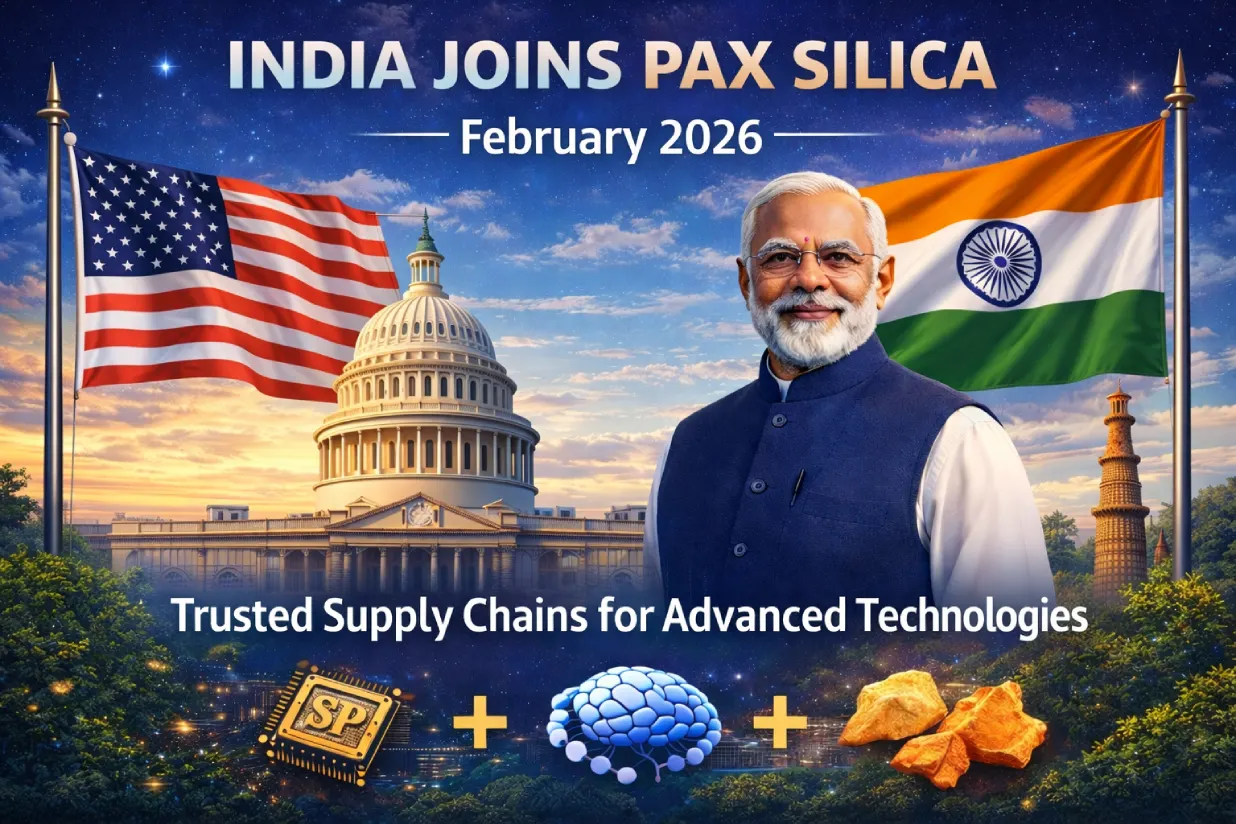
In February 2026, India formally joined Pax Silica, a United States led initiative focused on securing and coordinating trusted supply chains for advanced technologies, including critical minerals, semiconductors, and AI related infrastructure.
Pax Silica sits within a broader effort to deepen India, United States cooperation on critical technologies and supply chain resilience, while reducing exposure to concentrated, single source dependencies. This also reflects a wider trend in which economic security and national security are increasingly treated as linked priorities.
What exactly is Pax Silica
Pax Silica is presented by United States government channels as a major effort to align trusted partners around AI era supply chain security and advanced technology infrastructure. Its scope spans advanced semiconductors, AI compute, data infrastructure, critical minerals refining and processing, and related manufacturing and logistics capacity.
The initiative launched with a declaration signed in Washington, D.C. on December 12, 2025 at the inaugural Pax Silica Summit. The founding signatories were Australia, Israel, Japan, the Republic of Korea, Singapore, the United Kingdom, and the United States.
In January 2026, Qatar and the United Arab Emirates joined as signatories. India joined in February 2026, signing the Pax Silica Declaration at the India AI Impact Summit in New Delhi.
In practical terms, the declaration and official readouts emphasize coordination on protecting critical infrastructure, safeguarding sensitive technologies, addressing non market practices including dumping, and accelerating the build out of trusted capacity across the supply chain. Many public explanations describe this work as spanning both policy coordination and real world projects, but the official documents are clearest on the themes and the cooperation areas rather than a fixed internal structure.
If AI is the new oil, Pax Silica is an attempt to coordinate who secures the inputs, who builds trusted processing and manufacturing capacity, and where critical infrastructure is scaled.
How India positioned itself before joining
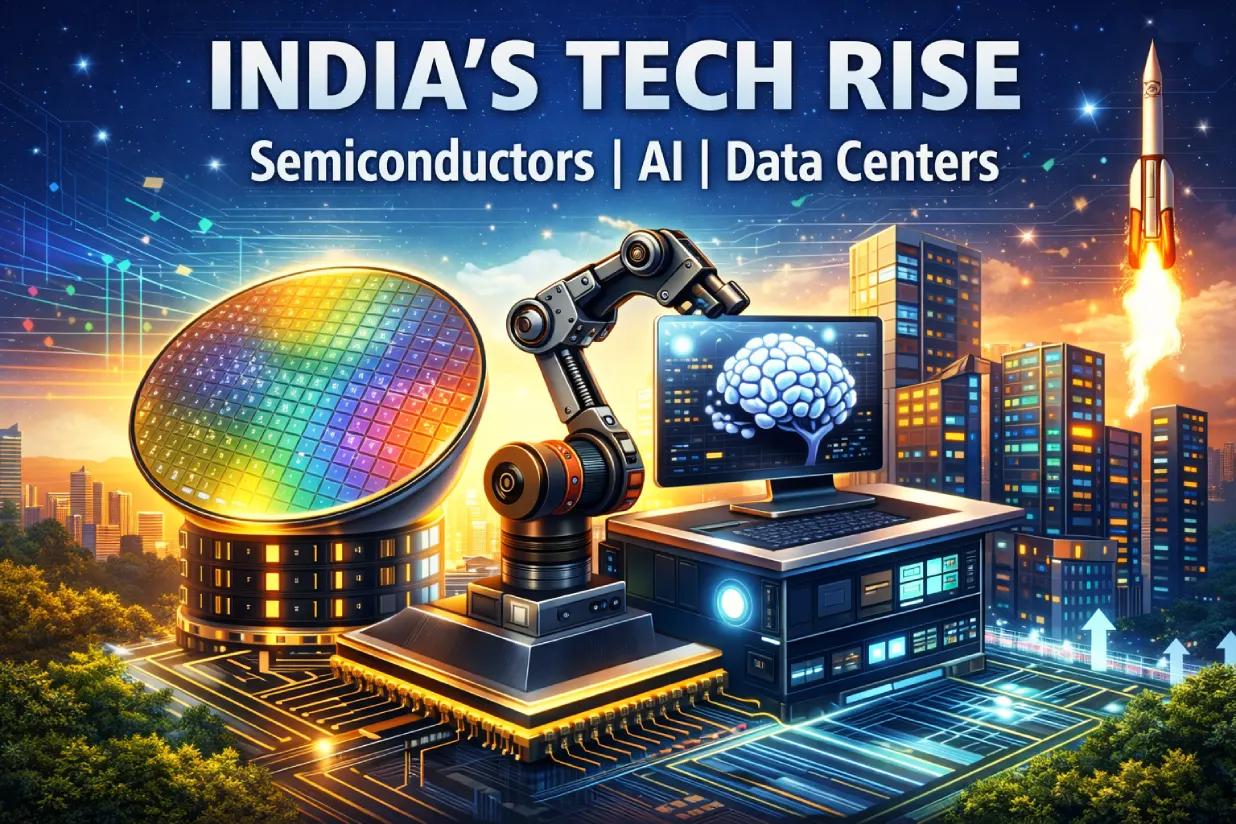
India did not arrive at Pax Silica by accident. It has spent the last few years positioning itself as a trusted, capable partner for critical technology supply chains.
Semiconductors and supply chains
In 2024, the United States announced a new partnership with India to explore semiconductor supply chain opportunities, supported by funding enabled through the CHIPS Act framework. The emphasis was on investment pathways, ecosystem development, and workforce cooperation.
Independent policy analysis has also highlighted India as a promising location for assembly, testing, and packaging, alongside a strong and expanding base of chip design talent that can plug into allied supply chains.
AI and digital infrastructure
Alongside India’s Pax Silica signature, India and the United States signed a Joint Statement on the India, United States AI Opportunity Partnership. This is a bilateral track intended to deepen cooperation on AI, critical technologies, and resilient supply chains.
Indian official messaging has framed Pax Silica as part of a coordinated push across AI, semiconductors, and critical minerals, aimed at resilient collaboration with trusted partners.
Data centers and digital capacity
India’s data center capacity has expanded rapidly, and multiple credible reports support the direction of travel. However, some very specific figures often cited in commentary vary by source and by methodology, for example whether a number reflects inventory, operational capacity, under construction pipelines, or a defined market subset.
One widely cited JLL release states that India’s data center capacity surpassed 1 gigawatt in 2024 and is projected to rise to roughly 1.8 gigawatts by 2027, a sharp increase driven by cloud demand and AI workloads. If you include an investment figure, use the exact number from the specific JLL release you are citing, because different JLL pages and market updates reference different investment totals and definitions.
Separately, some industry trackers and market summaries in early 2026 cite operational capacity reaching roughly 1,520 megawatts by the end of 2025, following a record year of additions. If you keep these numbers, it is best to cite the original tracker or report that produced them rather than an aggregator summary.
Taken together, the message is clear even without over precise numerics. India is not only a large digital market, it is also building the infrastructure base that can absorb and deploy advanced AI compute at scale.
Where India fits inside Pax Silica
India’s entry was formalized at the India AI Impact Summit in New Delhi. At that event, India signed the Pax Silica Declaration and also signed the bilateral India, United States AI Opportunity Partnership joint statement.
United States Ambassador Sergio Gor publicly described India’s entry as “strategic and essential,” linking it to the coalition’s ambition to shape technology and economic security in the coming decades.
Official framing around India’s role commonly emphasizes three advantages.
First, deep engineering and manufacturing capabilities, including growing capacity in critical minerals processing and electronics.
Second, a large digital economy and a strong talent base across AI, software, and semiconductor adjacent ecosystems. This point is widely used in analysis and public commentary, and it is directionally consistent with the broader record, even when not always listed as a formal bullet in every official release.
Third, a trust factor rooted in partnership among democracies in the Indo Pacific, aligned with the goal of resilient, values based supply chains.
In short, India is not only seeking access to chips and compute. It is positioning itself as a meaningful node in the silicon stack, spanning minerals, processing, manufacturing capacity, and data infrastructure.
The upside for India: power, capital, infrastructure
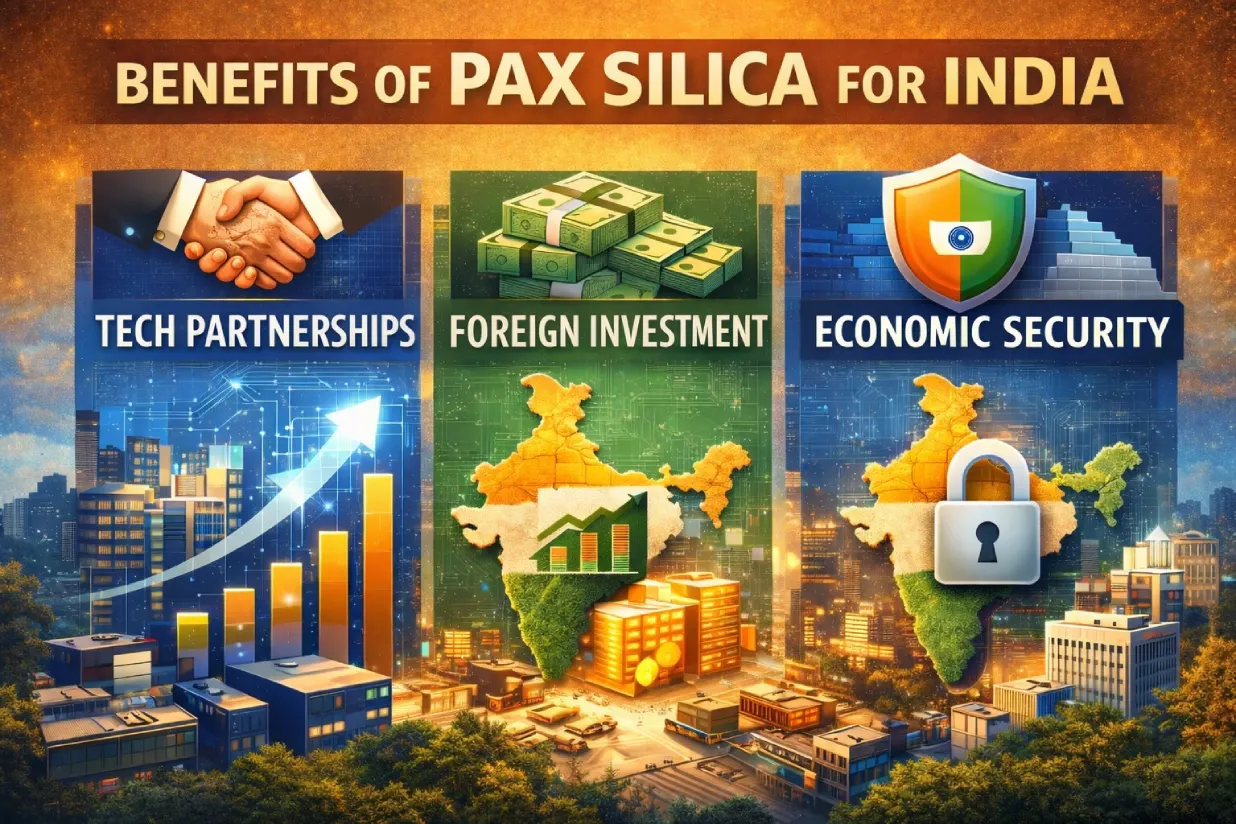
From a business and strategy perspective, India’s seat at the Pax Silica table creates several tailwinds, even though many implementation details will be worked out over time.
1. Clearer channels for high end technology cooperation
The Pax Silica declaration explicitly covers a broad set of areas, including compute and semiconductors, connectivity and data infrastructure, advanced manufacturing, logistics, minerals refining and processing, and energy.
For Indian companies, membership can improve narrative credibility in sensitive supply chain discussions, because “trusted partner” framing increasingly matters. Still, it does not automatically change export control rules, licensing requirements, or investment screening. Each transaction remains subject to the relevant national laws and regulatory processes.
2. Stronger comfort for global capital
Officials and analysts increasingly describe an environment where economic security and national security are treated as linked, and where allied supply chain capacity may attract supportive policy attention.
For investors, India’s membership can reinforce confidence in themes that are already moving, such as large data center campuses in major hubs, AI oriented infrastructure aligned with national missions, and semiconductor ecosystem investments connected to broader diversification efforts.
The key point is not that Pax Silica creates demand by itself. It can help align policy posture, partnerships, and long term supply chain intent in a way that reduces perceived geopolitical risk for certain categories of projects.
3. More voice in guardrails and coordination
Pax Silica places strong emphasis on critical infrastructure security, protection of sensitive technologies, and responses to non market practices such as dumping.
That gives members a forum for coordination, and it can influence how trusted vendor expectations and security norms evolve across partner ecosystems. Claims that it directly lets members “shape export controls” should be phrased carefully, since export controls are still set through national legal and regulatory frameworks, even if coordination influences the surrounding environment.
The trade offs and the strategic choice
The trade offs are real. By joining a United States led initiative focused on securing high tech and AI supply chains, India is aligning more closely with United States economic security thinking in this domain.
In practice, that can mean greater sensitivity around United States export controls and technology screening for certain categories of advanced technologies, even when projects are physically located in India. It can also mean more political and practical constraints on deep technology cooperation with actors that Washington treats as high risk in these supply chains.
Indian official framing argues that the upside is worth it. The logic is that India protects its own digital sovereignty by securing access to critical inputs, diversifying away from single source dependencies, and embedding itself within a network of trusted partners.
What Pax Silica means for you: India, United States business
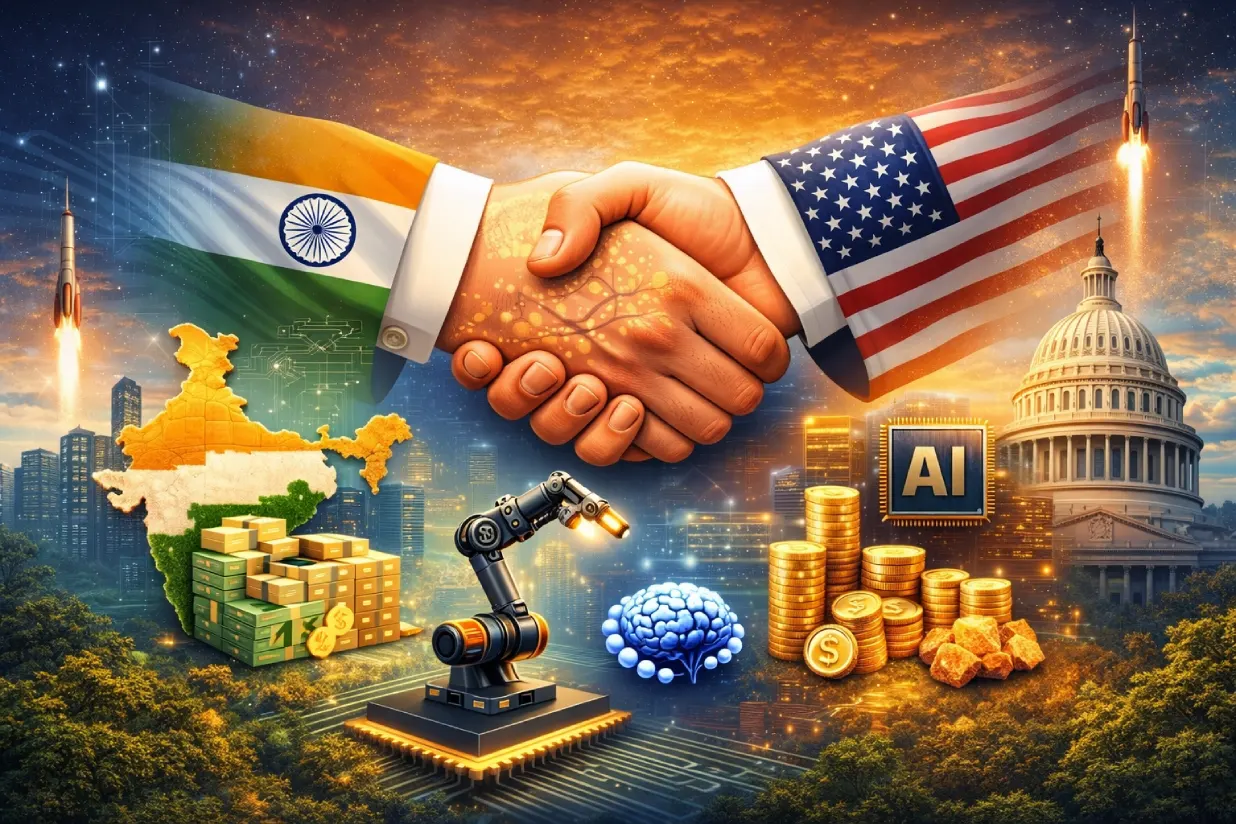
For founders, investors, and professionals working in or with India, Pax Silica does not change everything overnight, but it does tilt the playing field.
Capital is likely to show increasing preference for “alliance friendly” bets, meaning projects that clearly fit into trusted hardware, secure cloud, AI infrastructure, semiconductor design, packaging, testing, data centers, and adjacent supply chain capacity, rather than ambiguous plays that create security or compliance uncertainty.
Partnerships with firms in founding signatory countries, and in countries that joined soon after, can be easier to position within a shared strategic framework. As of March 2026, the clearest publicly supported signatory set includes Australia, Israel, Japan, the Republic of Korea, Singapore, the United Kingdom, the United States, Qatar, the United Arab Emirates, and India. If you include any additional countries, cite an official signing announcement or a clearly dated authoritative source.
Finally, deal conversations will put more weight on technology security and supply chain resilience, not only on price and performance. Boards and governments are treating these topics as strategic, and that changes which projects clear hurdles fastest, which geographies are favored, and where subsidies and risk capital are most likely to flow.
You do not have to agree with the strategy to be affected by it. If you are building anywhere near chips, compute, data infrastructure, or critical minerals, you will want to internalize how this kind of coalition shaping is changing incentives and constraints across the AI stack.